Abstract
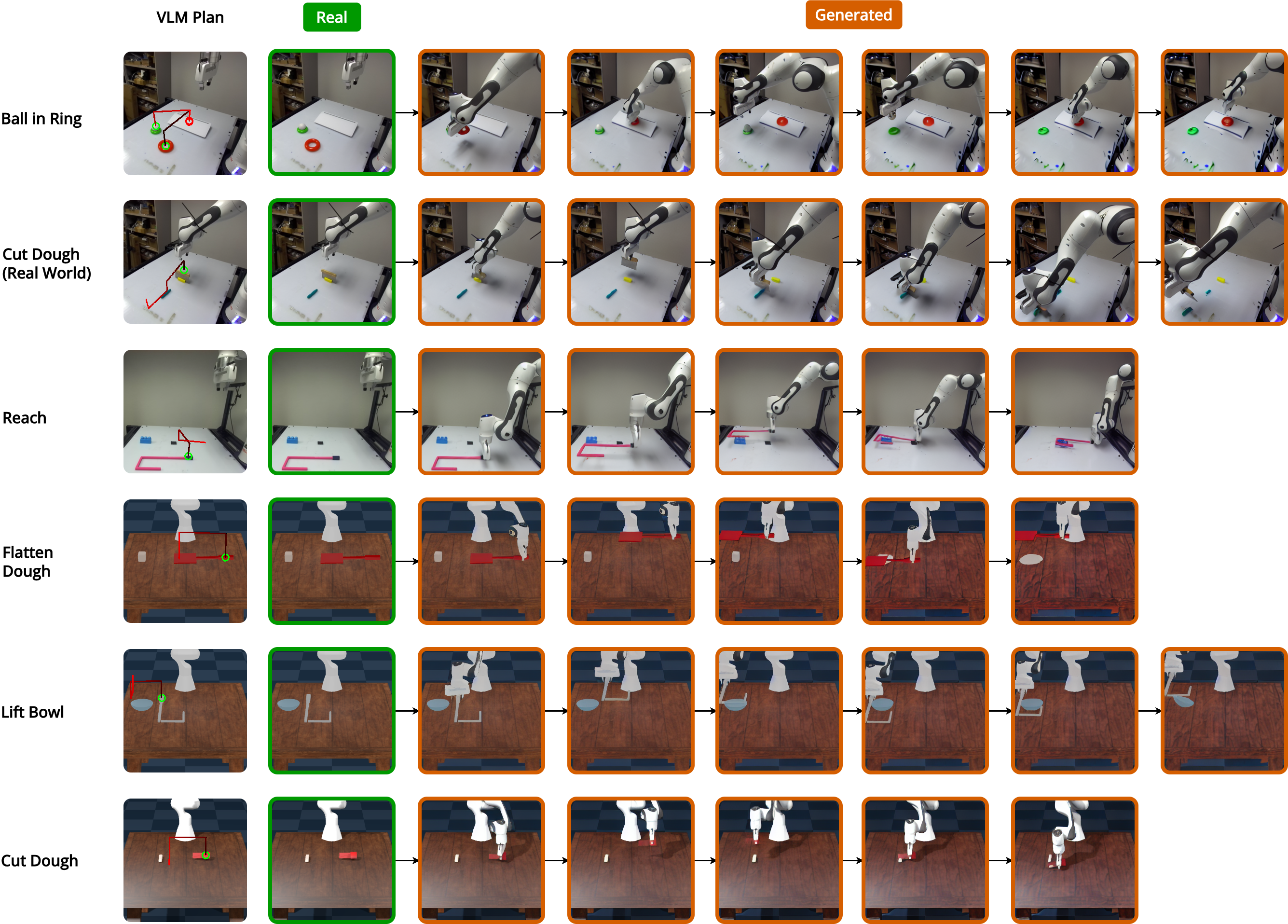
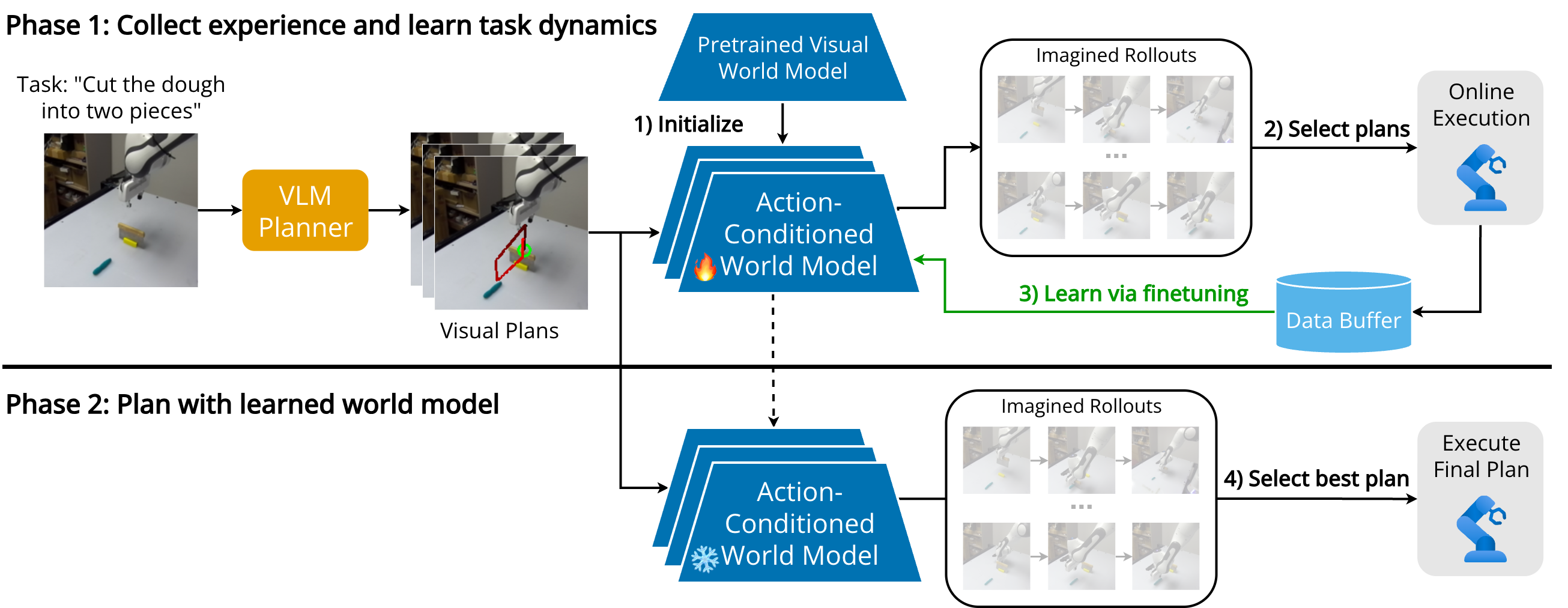
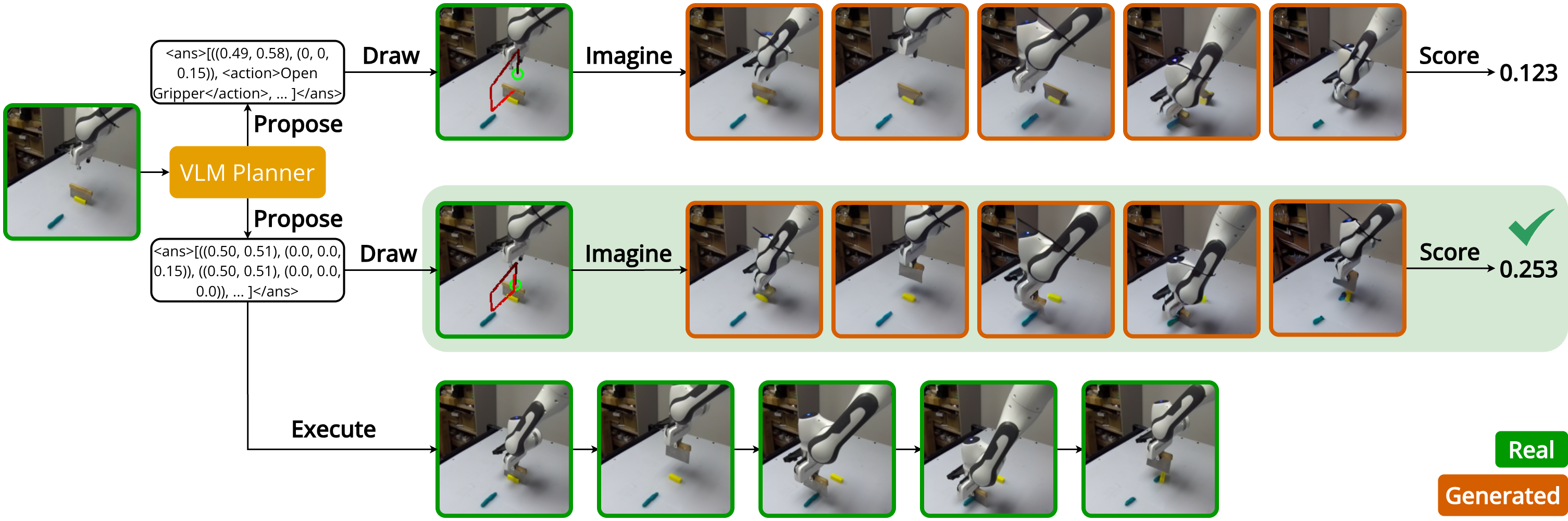
Robotic tool use requires semantic reasoning about how a tool can serve a goal and physical prediction of its interactions with the scene. Vision-language models (VLMs) can propose plausible strategies, but their plans often fail to account for task-specific geometry and contact dynamics. We present a framework that autonomously adapts an action-conditioned visual world model from the observed outcomes of VLM-proposed executions. The VLM generates gripper-centric plans through an anchor-offset representation, and the world model predicts their consequences for evaluation by a separately trained reward model. Only the world model is updated during interaction, using transitions from both successful and unsuccessful attempts. The adapted model then supports selection among new VLM proposals through imagined rollouts. Under this setting, the approach improves over direct VLM plan execution across simulated and real-world tool use tasks and outperforms the evaluated policy-learning baselines. These results suggest that learning task-specific dynamics from VLM-generated interaction data can improve tool use plan selection with a limited additional execution budget.
Demos
Successes
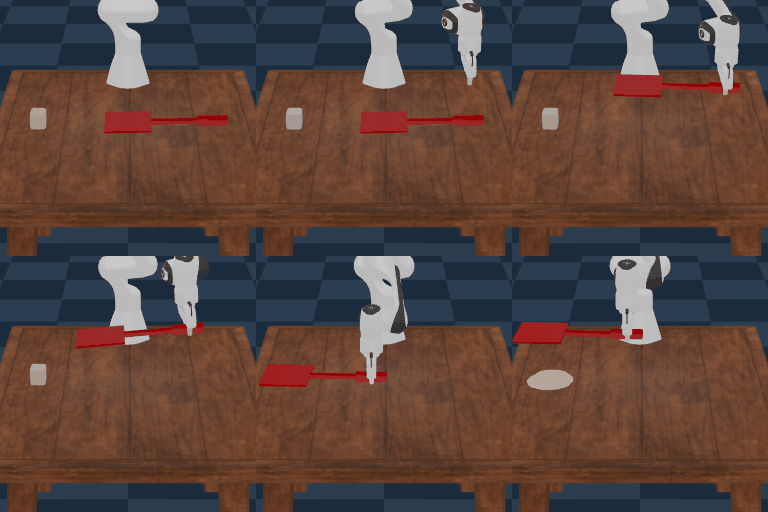
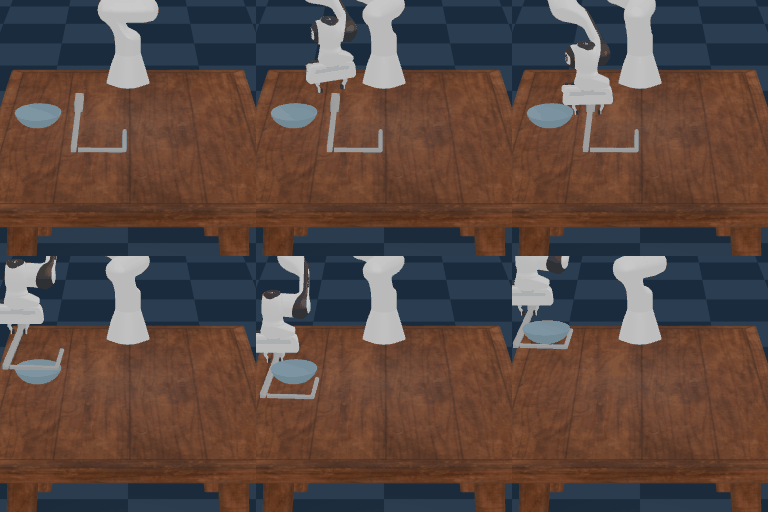
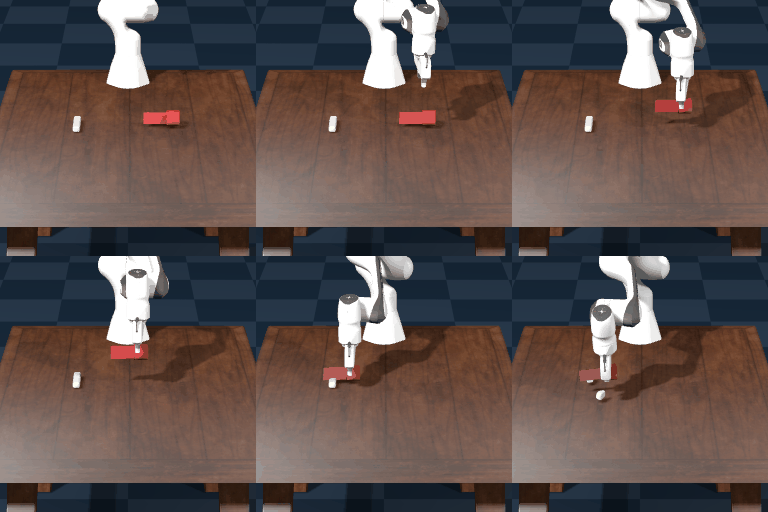
These videos show the successful outcomes of the selected VLM plans at test time.
Outcomes at Training Time
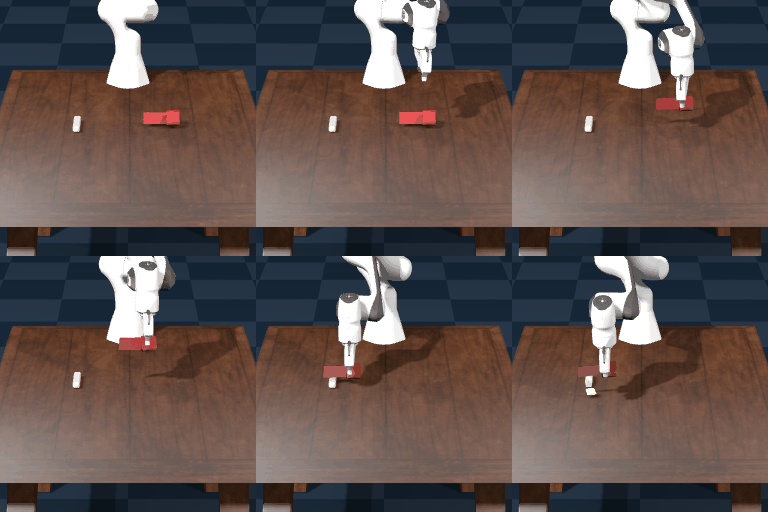
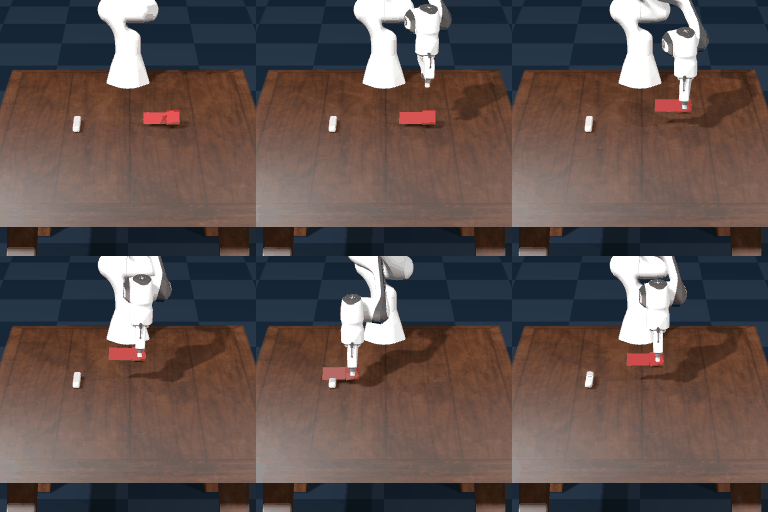
Our framework is able to learn from both successful and unsuccessful outcomes of executing VLM plans selected at training time. These outcomes are used to improve the world model so that it can select the best plan at test time. These videos show examples of failed or suboptimal outcomes from training time.
Cut Dough (5x)
Reach (10x)
Flatten Dough
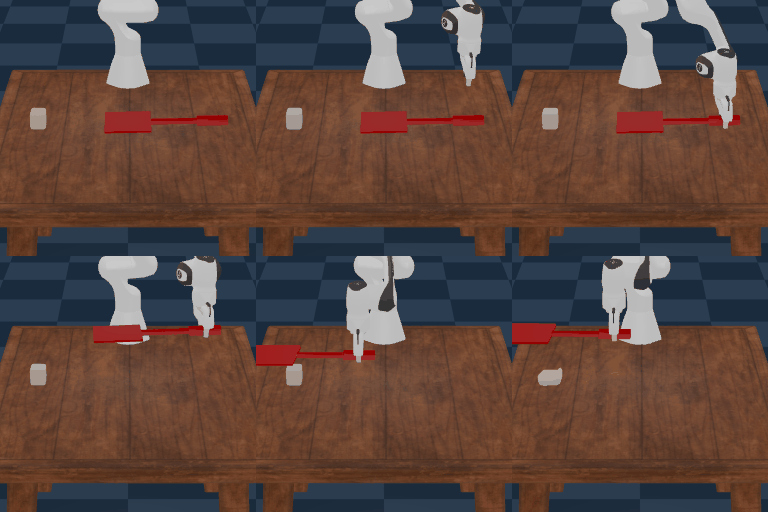
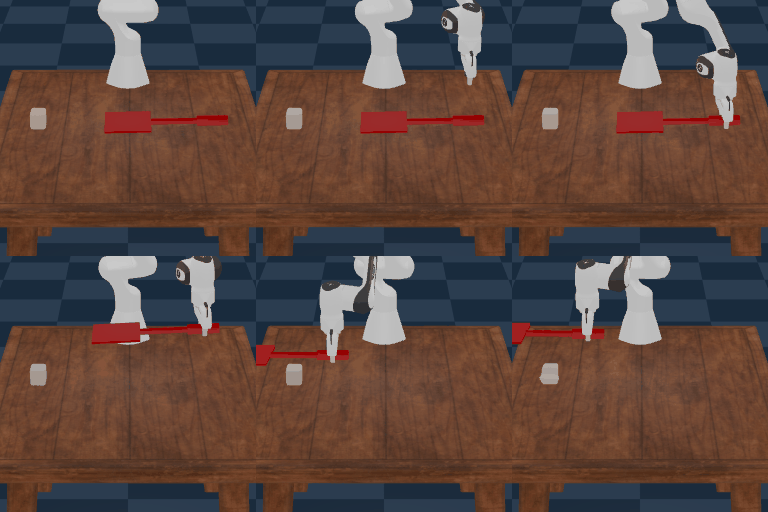
Lift Bowl
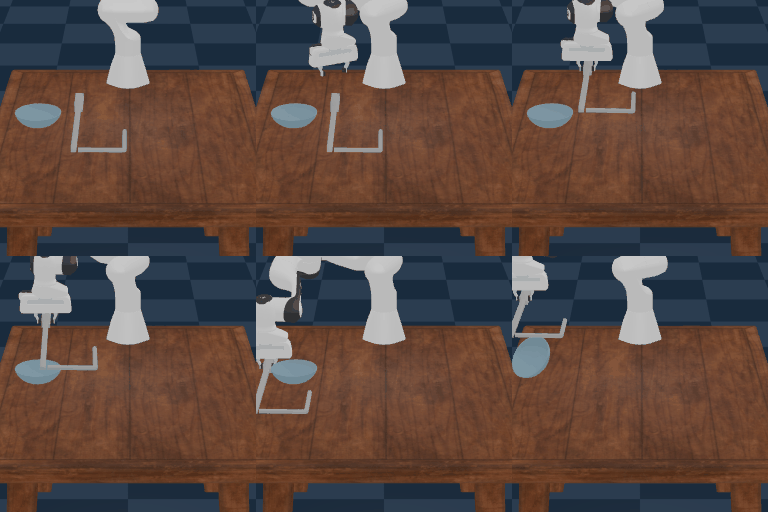
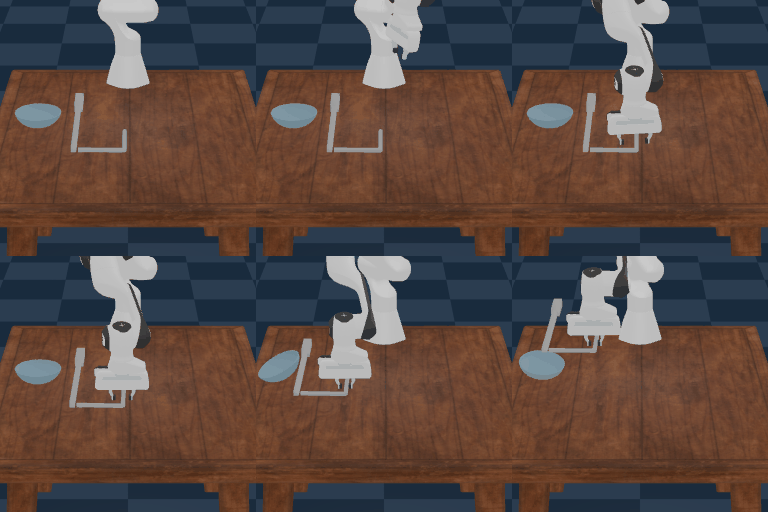
Cut Dough (Simulation)
Method Overview
World Model Rollout Selection
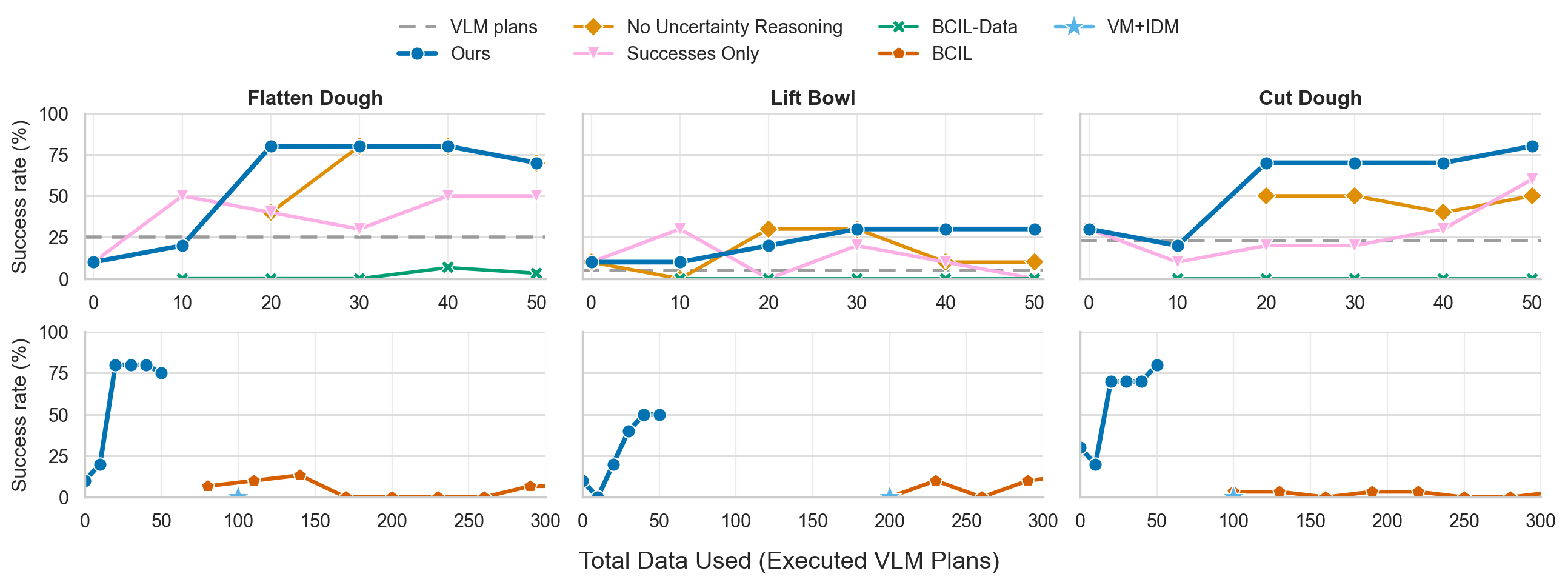
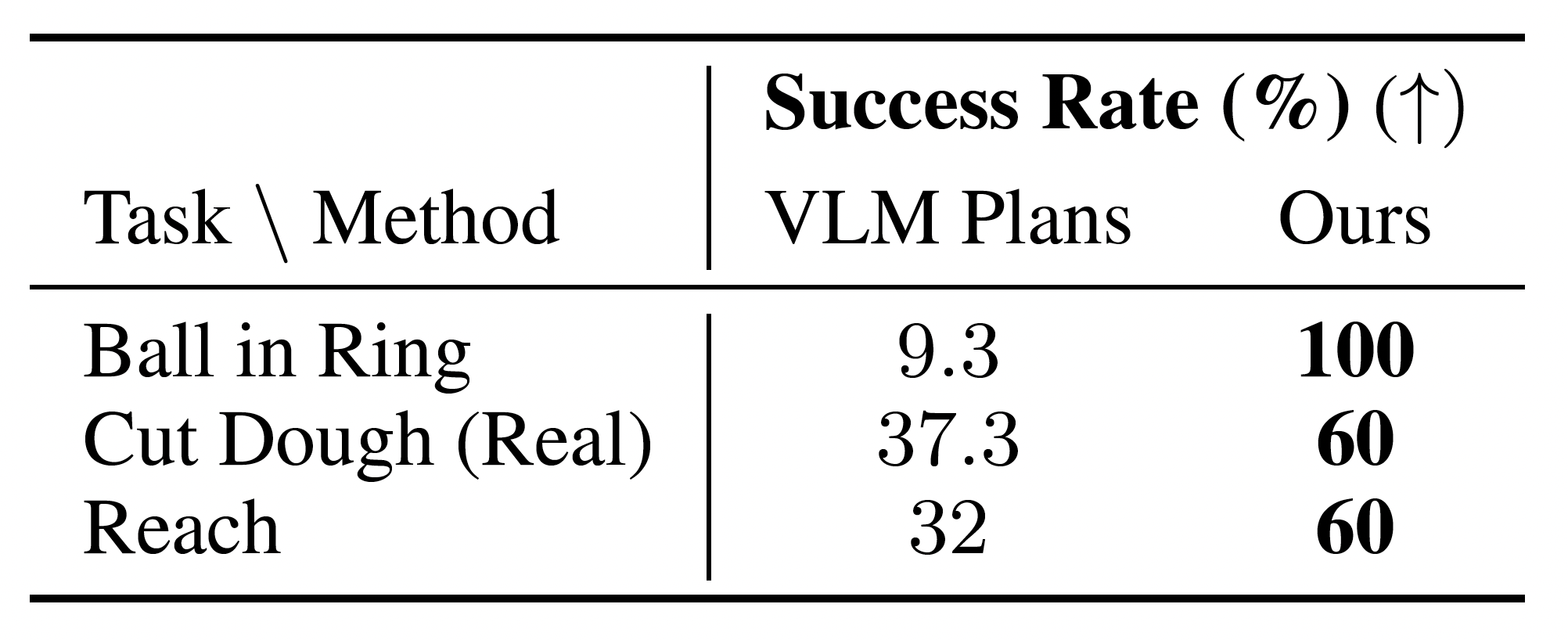
Quantitative Results
Qualitative Results